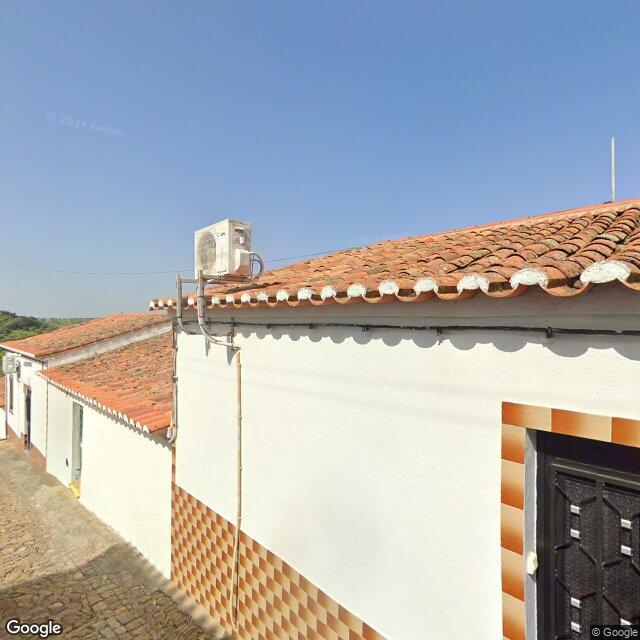
Two dates from the same year
On July 28, 2021, Statistics Portugal released the preliminary results of the Census. Barrancos appeared with 1,435 residents, 399 fewer than ten years prior: a drop of 21.8 percent, the largest of all 308 Portuguese municipalities. Four months later, on November 26, the Assembly of the Republic unanimously approved the bill recognizing and protecting Barranquenho.
Both events concern the same place and are almost never read together. The smallest municipality in mainland Portugal saw its way of speaking enter the Diário da República and the community that speaks it lose one in every five members in the same year.
There is a third date that closes the triangle, and this one is not commemorative. The deadline the law set for itself to be regulated expired on July 28, 2022. Four years later, it remains unfulfilled.
What the law says — and the word that isn't there
The bill is Law no. 97/2021 of December 30, published in the Diário da República on December 30, 2021, and promulgated on December 19. It resulted from two bills, one from the PS, presented on March 1, 2021, and another from the PCP, entered on April 16, merged into a single text.
It consists of seven short articles. The State recognizes the right to cultivate and promote Barranquenho, "as a vehicle for transmitting intangible cultural heritage, an instrument of communication, and an element reinforcing the identity of the population of Barrancos." It recognizes the right to learn it in schools, "in terms to be regulated by the Ministry of Education." It allows public institutions in the municipality to issue documents accompanied by a version in Barranquenho. And it provides scientific and educational support for research, documentation centers, teacher training, and the development of a spelling convention.
The comparison that gives the measure of the text is with the Mirandese law, Law no. 7/99 of January 29, of which the 2021 law is, article by article, a close copy. With one difference that can be read in the first two lines: the 1999 law speaks of the "Mirandese language"; the 2021 law never writes the word language — it always says "Barranquenho." A second difference is in the deadline: 90 days to regulate Mirandese, 180 for Barranquenho.
The deadline has passed. A report by the Assembly of the Republic itself on unregulated laws lists Law no. 97/2021 with the deadline expired on July 28, 2022, and the status marked as unregulated. A report by Alentejo Ilustrado in March 2025 adds that no budget was allocated to the execution of the law.
What you hear when you hear Barranquenho
Barranquenho is not Portuguese with an accent. Researchers who study it classify it as a contact language: a system with its own rules, born from the prolonged encounter between southern Portuguese and the southern Spanish varieties, Andalusian and Extremaduran.
The traits are audible and describable. Final -s and -z are aspirated or dropped: cruh for cruz, buhcá for procurar. Final -l and -r disappear: Manué. Intervocalic -l becomes r: argo for algo. Final -e closes to i: pobri. The j and g in ge and gi sound Spanish. Castilian forms enter the lexicon and grammar: nusotrus instead of nós, andubi instead of andei, the diminutive in -ito where Portuguese uses -inho.
Morphosyntax is where the mixture becomes structural. Clements, Amaral, and Luís described in 2008 the proclitic placement of the pronoun, the duplication of the indirect object, and the use of the compound preterite according to the Spanish pattern — traits that cannot be explained by word borrowing, but by deep contact between grammars. A phrase published in 2025 by Alentejo Ilustrado summarizes the effect better than any description: «Quasi que mê caio.»
It is neither a peaceful nor an old classification. Maria Filomena Gonçalves and María Victoria Navas Sánchez-Élez proposed in 2020, in the journal Estudos de Lingüística Galega, that Barranquenho be treated as a language lato sensu and described it as "a contact language, minority, threatened, and in danger of extinction." Navas Sánchez-Élez had published in 2011, through Editorial Complutense and the Linguistics Center of the University of Lisbon, El barranqueño. Un modelo de lenguas en contacto, the reference monograph. Above all, José Leite de Vasconcelos did fieldwork in Barrancos in 1938; his Filologia Barranquenha was only published posthumously in 1955.
Why it is spoken like that there and nowhere else
The answer lies in the geography and chronology of settlement, and it is verifiable document by document.
Barrancos was born in the shadow of Noudar, the fortified settlement that King Dinis donated to the Order of Aviz on November 25, 1307, which was part of the defense of the border line with Castile. In 1493, a licentiate, Vasco Fernandes, was sent to investigate whether Barrancos belonged to Castile or Portugal; it was concluded that it was on the Portuguese side, despite the population being mostly of Castilian origin. In 1532, Barrancos had about seventy inhabitants and Noudar six. In 1639, it had two hundred hearths. In 1734, about two-thirds of the population were Spanish, likely coming from the Aroche and Aracena mountains in the current province of Huelva.
Administrative status accompanied instability. Barrancos became the seat of the municipality in 1836, with 396 hearths, when the seat was transferred from Noudar. It was abolished in 1896 and annexed to Moura as a parish. It regained autonomy by decree on January 13, 1898, approved by the Cortes on July 26, 1899. The border itself was only formally defined by the Boundary Treaty of September 29, 1864; before that, the borderland was an imprecise line where people, livestock, and trade circulated.
What is missing is the factor that fixed everything: the isolation is not in relation to Spain, it is in relation to Portugal. The Spanish towns are a few kilometers away; the nearest Portuguese locality, Santo Aleixo da Restauração, is 21 kilometers away, and Moura is 50. For centuries, the neighbor spoken to every day was Spanish, and the compatriot was half a day's journey away. This is why Barranquenho is a unique case and not the first of a series: the same border, at other points, did not produce the same result because it lacked this combination of proximity and distance.
How many speak it? No one publishes a number
There is no official estimate of Barranquenho speakers. Neither the State nor the municipal council publishes one, and academic research works with approximations of the total population: Ana Paula Banza, in 2020, describes a community of "fewer than 2,000 inhabitants" where the variety is spoken by everyone; a sociolinguistic study presented in 2021 is based on interviews with 20 speakers — a sample, not a count.
In the absence of a speaker count, the number of inhabitants is the best available indicator, and the series is long. Barrancos had its historical peak in 1950, with 3,624 residents. In 1981 there were 2,157; in 2001, 1,924; in 2011, 1,834; in 2021, 1,438 in the definitive results. Between 1950 and 2021, the municipality lost close to 60 percent of its population.
At school, the picture is the same. The school cluster's educational project for 2024-2027 records 138 students in total, distributed across preschool, primary, middle, and high school cycles, and notes the gradual loss in all of them — the middle/high school cycle dropped from 56 students in 2019/20 to 34 in 2021/22. The municipality's aging index is at 225 elderly people for every 100 young people. A language transmitted through daily coexistence needs overlapping generations in the same place; that is what these numbers measure.
The contrast that shows what is missing
The most useful comparison is not with Mirandese, but with Aranese from the Aran Valley in Catalonia — a variety of Occitan spoken in a mountain valley with an order of magnitude of speakers similar to that of Barrancos.
Aranese has been protected since the 1979 Statute of Autonomy of Catalonia, was declared the official language of Aran by Law 7/1983, and the third official language of Catalonia by Law 35/2010. It is taught at all levels of compulsory education and has been the vehicular language of instruction in the valley since 1984. The 2001 census pointed to about 2,600 native speakers; in 2020, 61 percent of the valley's population knew how to speak it.
Mirandese is halfway there. It has had a law since 1999, a spelling convention in the same year, and teaching in the schools of Miranda do Douro — but optional, one hour a week, with a lack of textbooks and specialized teachers. A study by the University of Vigo in 2020 pointed to about 3,500 people who know the language and about 1,500 who speak it regularly.
Among the three cases, the decisive difference is not the number of speakers or the antiquity of recognition: it is whether or not there is regular teaching with trained teachers and materials. Aran has had it for over forty years. Miranda has a reduced version. Barrancos has the right written in law and no regulation to make it applicable.
Writing arrived first
On July 15 and 16, 2025, the II International Congress dedicated to the variety took place at the Barranquenho Interpretive Center. At the end, three tools that did not exist were handed over to the municipality: a spelling convention, a basic grammar with exercises, and a dictionary with over a thousand words, conceived as an open work and made available in a mobile application. Coordination fell to Maria Filomena Gonçalves and Victor Correia from the University of Évora, and María Victoria Navas from the Complutense University of Madrid.
None of this was done under the 2021 law, because the law remains unregulated. It was done by two universities, the UNESCO Chair of the University of Évora, and the municipal council, in a program that began in 2017 and is funded by the local authority. The teaching that exists is episodic: in March 2024, three sessions of a writing workshop with students from the seventh to the ninth grade.
What changes now is concrete and has a short deadline. A language without status and with speakers survives; a language with status, grammar, and dictionary but without transmission becomes an archive. Barrancos today has the tools it lacked twenty years ago and fewer people to use them than at any time since the 19th century. The missing step — regulating Article 3 and putting Barranquenho on the school schedule — depends on an official order, not a discovery.