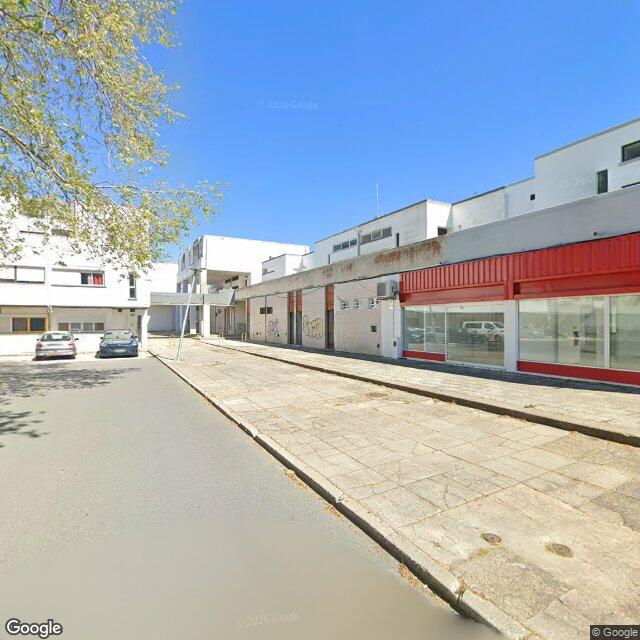
The explosion of real estate values
Real estate dynamics in Sines have registered a deep acceleration over the past few years, reflecting directly on the cost of acquiring a property. According to Aicep Global Parques (2026), the median price per square meter for housing doubled in the three-year period between 2023 and 2026. This expressive rise radically altered the financial landscape for those looking to live in the region.
To contextualize the scale of this value within the national territory, Statistics Portugal (INE, 2026) indicated that, in the first quarter of 2026, the median price of family accommodations transacted nationwide stood at 2,337 euros per square meter. The value registered in Sines far exceeds this national average, distancing itself from the usual pace seen in other geographies outside major urban centers.
The impact of this real estate inflation led the Mayor of Sines, Álvaro Beijinha, to warn in 2026 that the level of housing prices practiced in the municipality already exceeds the values recorded in the metropolitan areas of Lisbon and Porto. This reality poses an immediate accessibility challenge for families who routinely reside in the municipality.
The industrial engine and the scarcity of space
The pressure exerted on the housing stock does not arise in isolation, being linked to a cycle of major energy and industrial projects planned for the municipality. According to Aicep Global Parques (2026), around 30 industrial and energy projects are planned in Sines, representing a global investment exceeding 25 billion euros by 2031. This volume of capital has attracted intense economic activity to the Alentejo coast.
In parallel with financial investment, the industrial pipeline foresees the creation of 4,577 direct jobs and 6,903 temporary jobs in the region by 2031, according to data from Aicep Global Parques (2026). This influx of workers generates increased demand for housing in a local market already characterized by a situation of near full employment, as pointed out by the Municipality of Sines (2026).
Given this imbalance between supply and demand, the Minister of Economy and Territorial Cohesion, Manuel Castro Almeida, publicly assumed in January 2026 (Government of Portugal, 2026) that the main bottleneck of the municipality of Sines in the face of projected investments is precisely housing. The absence of adequate residential response threatens to condition the full realization of the economic potential projected for the territory.
Public responses and geographical alternatives
Public entities and local bodies have tried to design responses to mitigate the scarcity of permanent housing in the urban area of Sines. The Administration of the Ports of Sines and the Algarve (APS, 2025) requested in July 2025 the amendment of the Detailed Plan for the Western Zone to build a minimum of 50 housing units under a rental regime, in an investment of 10 million euros by 2028.
However, the scale of these municipal and port interventions confronts the magnitude of the needs generated by the expanding industrial fabric. As an additional note on the macroeconomic context, Eurostat (2025) recorded in the fourth quarter of 2025 that housing prices in Portugal presented a year-on-year change of 18.9%, constituting the second largest increase among European Union Member States.
To find a path to structural relief, the Ministry of Infrastructure and Housing indicated in May 2026 that the response to housing pressure in Sines necessarily involves mobilizing the urban expansion potential of Vila Nova de Santo André (Ministry of Infrastructure and Housing, 2026). This territorial articulation seeks to divert demand to neighboring municipalities and clusters, trying to ease the tension felt in the center of the municipality.
The linear impact hypothesis and financial prudence
The most obvious reading would tend to assume that an industrial boom valued at 25 billion euros (Aicep Global Parques, 2026) would bring immediate and generalized wealth, absorbed harmoniously by the local economy without generating additional social costs. However, data demonstrate a perverse effect of financial exclusion for traditional families, whose stagnant incomes collide with an average of 3,780 euros per square meter (Lusa News Agency, 2026).
To test the robustness of this linear growth scenario, the Government of Portugal introduced notes of caution through the Ministry of Economy in January 2026 (Government of Portugal, 2026). Minister Manuel Castro Almeida recalled that not all announced projects will materialize in full, contradicting the simplistic reading of a maximum and immediate impact on the demography and housing stock of Sines.
If this pace of real estate appreciation observed between 2023 and 2026 (Aicep Global Parques, 2026) were to mechanically prolong over the next two decades — which would constitute a strictly arithmetic exercise and not a forecast — the price per square meter would reach levels inaccessible to any ordinary worker. However, such a hypothetical trajectory would inevitably break if a retraction were to occur in the industrial investments projected until 2031 (Aicep Global Parques, 2026) or if insurmountable physical and legal limits arose in local construction capacity.
The dilemma of those who live and work in the municipality
For those who daily inhabit Sines, the conversion of the territory into a global energy transition hub translates into a complex equation of family budget management. The scarcity of homes at prices compatible with local salaries forces difficult choices between bearing unaffordable costs or seeking residence outside the municipality limits, altering the traditional social dynamics of the community.
Decisions made up to 2028, such as the 10 million euro port rental plan (Administration of the Ports of Sines and the Algarve, 2025), and the housing utilization of Vila Nova de Santo André monitored by the Ministry of Infrastructure and Housing in 2026, will define the available margin for maneuver. The outcome of this crisis will depend on the ability to align the schedule of the 30 industrial projects (Aicep Global Parques, 2026) with the effective construction of residential infrastructure.
The immediate future of the municipality is played out on this narrow border between attracting external capital and retaining local populations. The value of 3,780 euros per square meter set in 2026 (Lusa News Agency, 2026) acts as a limit indicator of a territory under pressure, whose demographic and economic balances remain open.